


ROADIS operates in two countries in Europe. In Portugal, ROADIS manages 272 km of highways in 2 concessions that connect major cities in the country, linking important tourist areas and facilitating connections between several main roads. In Spain, we manage a 64-km concession on the A-4, a key highway that connects the centre and the south of the country. The company is responsible for managing, maintaining and operating this asset.

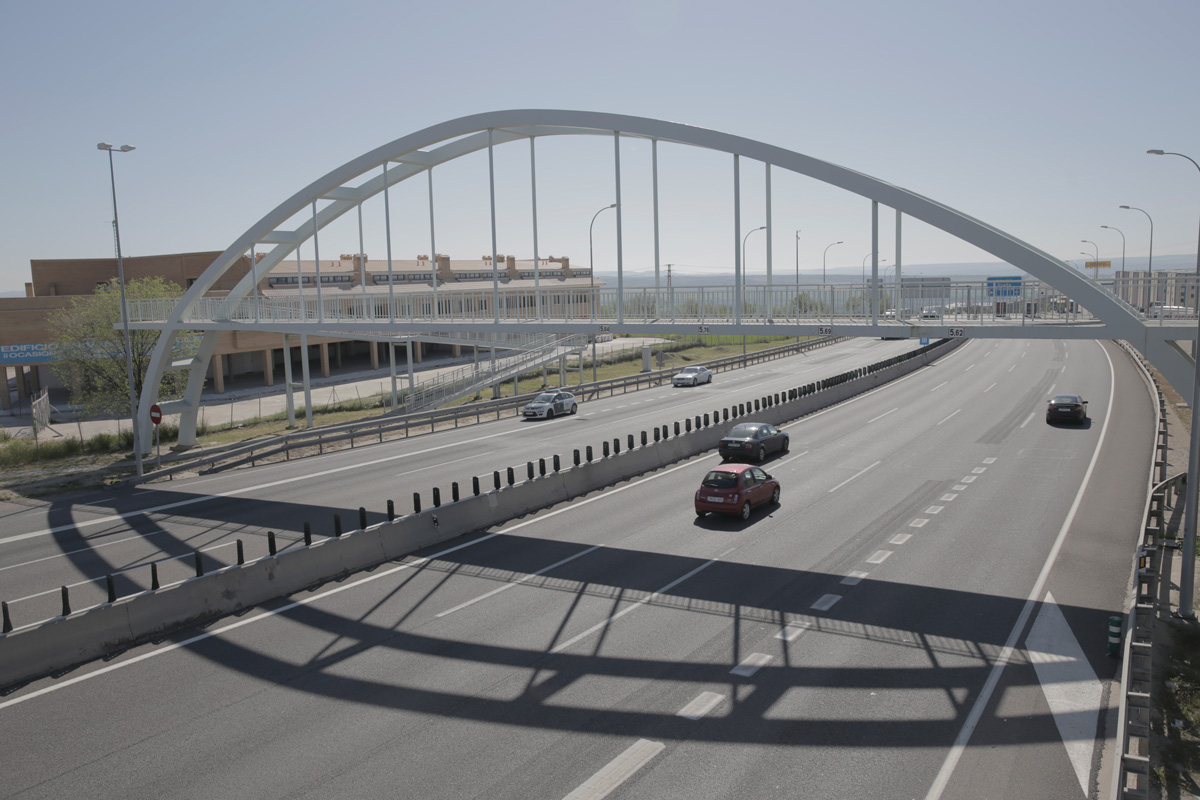
The company is responsible for maintaining and operating a stretch of the A-4, one of the main highways in Spain and the main transport artery between the centre and the south of the country. The concession started operating partially in 2010 and was fully operational as of 31 December 2011.

170 km of concession made up of 2 direct toll highways (A8 and A15), in the most important economic development corridor in Portugal, between Lisbon and Oporto. This concession manages one of the main access routes for drivers who enter the country's capital each day.
The concession contract includes the construction, financing, operation and maintenance of the A8 (Lisbon-Leiria) and the A15 (Caldas de Rainha-Santarem). The concession was awarded in 1998. The project was progressively implemented, completing an existing network with new segments built until 2007.

102 km of different sections connecting the coast (Nazaré) with Portugal’s interior (Fátima and Ourém). Stretches of highways that connect one of the most important tourist areas in Portugal and facilitate the region’s connections with Portugal’s main north-south routes.
2018 saw the consolidation of the ROADIS portfolio in Europe with the incorporation of the new Portuguese assets: AEA and AELO. The challenge of integration has been carried out smoothly and quickly, allowing ROADIS to take control of both assets with its partners, ensuring good performance and balancing out our portfolio.
With respect to business development activities, we have analysed interesting opportunities in Europe in depth; with special attention paid to strategic countries such as Portugal, Spain and Greece. All this work will help establish the path to growth in these countries in 2019 and balance the portfolio between developed and emerging markets.
In 2018, ROADIS started a joint reflection on the importance of innovation, led by the Europe team.
>We conducted research on the meaning of this word as linked to our business strategy; we interviewed a lot of the company's leaders and organized working groups with our teams.
We met in brainstorming sessions that gave shape to more than 50 initiatives.
After all this reflection, innovation has become a firm commitment of the company; we want it to be part of our DNA. We have come to understood that innovating means doing things differently, innovation is born out of each one of us and it is enhanced by cooperation.

Innovation will allow us to achieve 3 objectives: 1. Maximize efficiency. 2. Create value. 3. Develop new business lines.
In this regard, we continued working on the VIA-4U road safety platform in 2018 with the aim of establishing the best line of development to continue this project, which started with a pilot implementation project in 2017. Currently, and with the creation of the Innovation area at ROADIS, a new impetus to the effort is expected.
2018 show a slower growth dynamic in the Eurozone. It seems likely that some temporary factors have contributed to the slowdown in activity at the end of 2018. Along this line, most forecasts have lowered projected interest rates for the eurozone: the European Central Bank expects a GDP growth rate of 1.1% for 2019, 1.6% in 2020, and 1.5% in 2021. Compared to the projections of December 2018, real GDP growth for 2019 has been revised down by 0.6 percentage points.
After achieving its strongest growth of the century in 2017 (2.7%), the Portuguese economy expanded 2.3% in 2018, according to IMF estimates. Growth was mainly driven by strong domestic demand, which, however, is expected to lighten in coming years due to a reduction in job creation (partially offset by an expected increase in wages). Imports - which grow faster than exports - can also have an impact on the overall performance of the Portuguese economy, which is forecast to slow to 1.8% in 2019 and 1.5% in 2020 (IMF).
This recent prosperity has allowed the country to significantly reduce its budget deficit, which stood at -0.5% of GDP in 2018, aided by higher revenues relating to the cycle, lower interest expenditure and fewer public investments than originally budgeted. The deficit is expected to remain stable in 2019 and decrease to 0.4% in 2020. Similarly, the gross public debt to GDP ratio was reduced to 120.8% in 2018 (from 125.7% the previous year). With this, the downward trend is expected to continue in the coming years (to 115.1% in 2020, IMF), mainly due to primary budget surpluses and high nominal GDP growth.
The debt to GDP ratio remains one of the highest in the EU. However, the European Commission has praised the Portuguese Government for its efforts to respect European rules while pursuing an ambitious policy to support growth and social justice.

In addition, in December 2018, the country was able to repay the remaining 4.7 billion euros of the rescue loans granted in 2011 by the International Monetary Fund (the original repayment schedule had planned for the last repayment to the IMF to be in 2024). Despite the improvement in the economic situation, the banking system remains fragile. In 2018, the activation of the contingent capital mechanism for Novo Banco cost 0.4% of GDP, according to estimates by the EU Commission. In October 2019, the Portuguese people will vote in general elections, with the socialist party of the current prime minister, Antonio Costa, leading the polls for re-election.
Despite an increase in energy prices, the annual inflation rate remains relatively low at 1.7%. Inflation may experience significant volatility in coming years due to rising house prices, but should remain stable (1.6% in 2019, 1.8% in 2020).
The unemployment rate decreased to 7% in 2018 (from 8.9%), with monthly unemployment figures stabilizing at rates close to the Eurozone average. It is projected to continue to decrease (1.6% in 2019), but at a more moderate pace as a result of the maturing economic cycle. However, wages are expected to gradually accelerate, supported by the unfreezing of career progression in the public sector and a reduction in the labour market deficit.
In 2018, the economy grew at an estimated rate of 2.7% (IMF), mainly due to an active construction industry and increased public spending. However, lower household consumption and a fall in commercial investments, together with structural problems such as an unbalanced national budget and a high budget deficit and public debt, hindered the growth rate (which was the slowest since 2014).
The IMF forecasts a new slowdown for the Spanish economy in 2019 and 2020 (remaining at 2.2% and 1.9%, respectively), amid political uncertainty, a possible increase in fiscal pressure, weaker global growth and the protectionist tendencies worldwide. .
2018 was also characterized by political uncertainty in Spain. In fact, in June, former Prime Minister Mariano Rajoy (conservative) lost a motion of no-confidence and was replaced by the leader of the opposition: Pedro Sánchez, of the PSOE. At the same time, political fragmentation has increased and new parties such as VOX have appeared.
With regard to public finances, the country's budget deficit (2.7% in 2018) should remain stable in coming years (2.8%), while public debt stabilized at 97.2% of GDP (almost three times more than before the financial crisis of 2008). Structural reforms to give autonomous regions greater budgetary and financial stability remain the most important areas. Other pending reforms include technological innovation to diversify the Spanish economy, promoting better employment conditions, an improved R&D ecosystem and social programs based on the European Pillar of Social Rights. Inflation stood at 1.8% in 2018 (IMF), although it was lower (1.2%) according to the Spanish Statistics Office, mainly due to a fall in fuel prices.
The unemployment rate in Spain has decreased but is still very high: 15.6%. Although forecasts stand at 14.7% for 2019 and 14.3% for 2020. Another problem facing the Spanish labour market is the low level of the working population compared to the potential labour force, which indicates that many people abandoned the search for work.
In Europe, few new investments are expected under partnerships between the public and private sectors in the region. Only Greece has shown interest in developing new infrastructure under public-private partnerships. Most of the opportunities for growth are expected to arise in the secondary market, characterized by fierce competition for good quality assets.

In Spain, the Government is deciding to end the concessions on several toll highways. The first was the AP-1 (Burgos-Armiñón), on 30 November 2018, which reached the end of the fifty-year concession term. On the other hand, the AP-4 (Seville-Cádiz stretch) and a stretch of the AP-7 (Alicante-Tarragona) will expire next year on 31 December 2019.
These three highways total 552 kilometres, around 21% of the total toll road network in the country (2,550 kilometres). With respect to traffic, the AP-1 has an average of 16,321 daily users, the AP-4 has around 18,343 users and the AP-7 has 16,814 (Tarragona-Valencia) and 15,824 (Valencia-Alicante).
The abolition of tolls on these highways could set a precedent for highways with concessions ending in subsequent years. The concession on the AP-7, Barcelona-La Jonquera-Tarragona stretch and the stretch that unites Montmeló-El Papiol will subsequently end. The same will happen with the AP-2 concession (Zaragoza-Mediterranean), with the term ending on 479 kilometres in total in 2021.
Additionally, Spain needs to decide what to do with the nine toll highways owned by the Government and that have been managed by the public agency, SEITTSA, since 2018. The package includes the ring roads in the metropolitan area of Madrid and two highways on the Mediterranean corridor. Initially, they were expected to be transferred to the private sector under long-term 25-year concessions, but no definitive decisions have been made. A debate has also been opened on the advisability of implementing payment for use of toll-free road infrastructure.

Once again, the A-4 concession holder has been working together with the local community on actions to improve mobility in urban centres along the A-4. We have developed programs with the municipalities of Getafe (Cristo de Los Ángeles), Pinto (cleaning and pruning the vegetation next to the municipal swimming pool), Valdemoro (traffic management during the works on the street adjacent to the A-4) and Aranjuez (diversions - street cleaning- and traffic cuts during local festivities) in traffic management, helping and providing the resources required to minimize any issues safely. All this is always done in coordination with the Guardia Civil or the local police.
The ongoing cooperation with other road managers is also worth mentioning, essentially in order to guarantee citizens’ mobility in the best conditions. For example, the simulation of a terrorist attack in the tunnels of Calle 30 on the route of the A-4.
In terms of the environment, the use in AEA of bituminous mixes with rubber on road surfaces should be highlighted. AEA has already incorporated rubber equivalent to grinding more than 400,000 tyres on its road surfaces. This has made it possible to give a second life to a material that is highly polluting
Several road safety training actions have been promoted in Portugal with local fire departments. In addition, the maintenance of our assets, including the conservation of vegetation, contributes to the creation of sustainable surroundings that respect the environment.