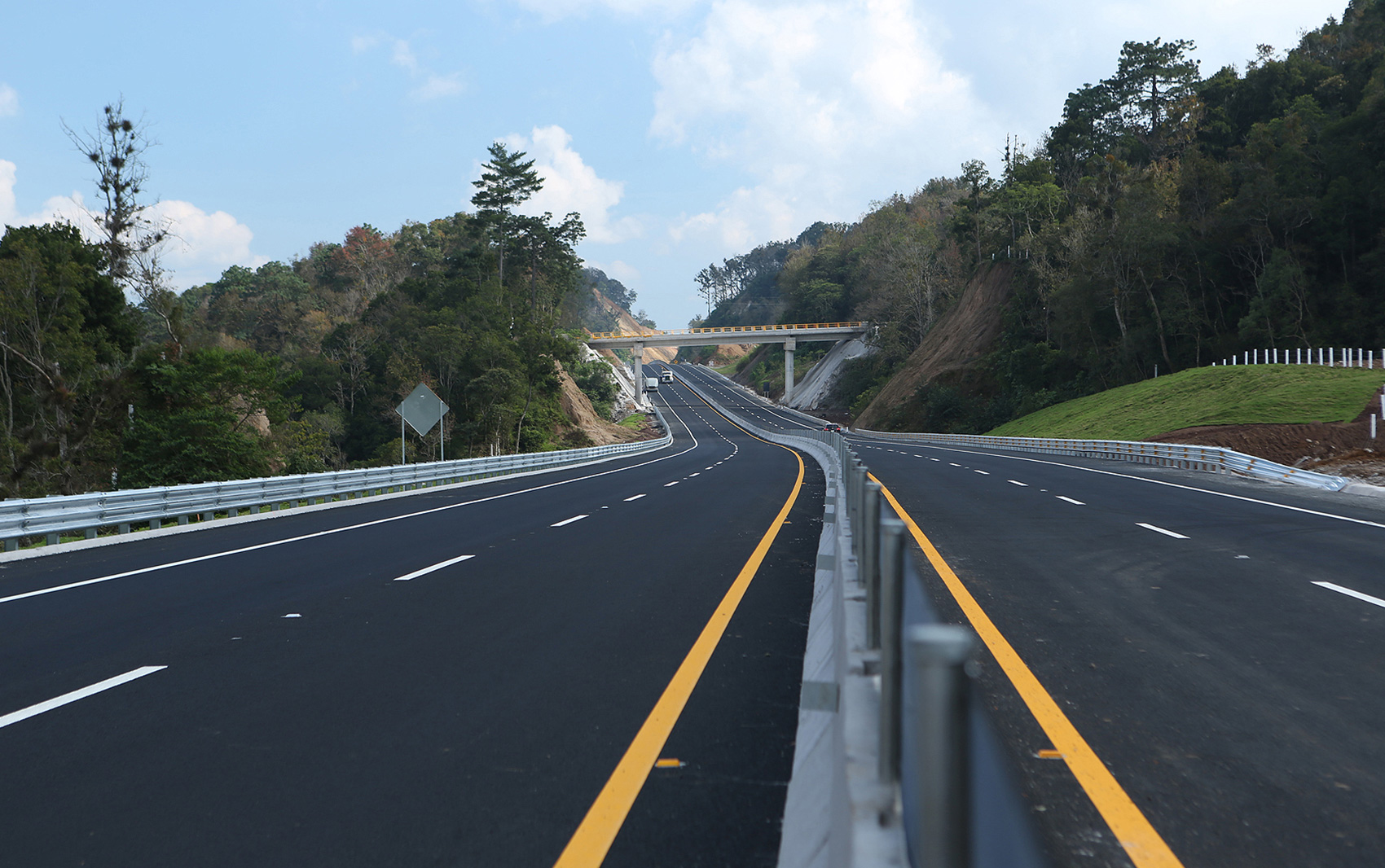


Given the few public and private procurement opportunities in the transport sector over the past several years, ROADIS USA continues to focus its strategy on developing unsolicited proposals for strategic infrastructure assets in the United States. With this vision, the company has strengthened its relationships with public sponsors in key markets such as California, Colorado and Florida. In parallel, it actively participates in the search for investment opportunities throughout the country.
ROADIS USA crafts innovative solutions to solve the unique challenges of infrastructure in the United States, offering investment partnerships for road, bridge and tunnel projects throughout the country.
As a key member of a global transportation leader, ROADIS USA brings its broad experience here to U.S. transportation infrastructure and toll operations. With offices in Denver, Colorado and Madrid, Spain, we are able to provide experts at every level of project development and operation, including traffic studies, economic impact analysis, transportation engineering and construction, multi-billion dollar financing, and advanced operation and maintenance.
The United States is the largest economy in the world, ahead of China. The economy grew 2.9% in 2018 - an improvement with respect to 2.2% in 2017 - and is expected to grow 2.5% and 1.8% in 2019 and 2020, according to the IMF. In addition, it is worth mentioning President Donald Trump’s tax reform act, which reduced the corporate tax rate from 35% to 21%. The bill known as the Tax Cuts and Jobs Act was presented to the House of Representatives in November 2017 and signed by the President in December 2017. One of the main objectives of the bill was to encourage investment.
The US budget deficit remained at -5.1% in 2018 and the IMF estimates that this trend will continue (-5.6% and -5.5%) in the coming years. The IMF also notes that public debt increased in 2018 to 106.1% of GDP and is expected to increase to 107.8% and 110% of GDP in 2019 and 2020, respectively. According to the IMF, the inflation rate remained stable at 2.4% in 2018 and is expected to decrease to 2.1% and 2.3% in the coming years.

The Bureau of Labor Statistics calculated an average inflation rate of 2.44% in 2018. Customs duties on various products, including steel and aluminium, will depend on the growth in 2019. Other risk factors include less corporate investment, the monetary policy applied by the FED, less competitive exports and an increase in military spending (80 billion dollars, equivalent to 0.4% of GDP). It is expected that high oil prices will boost the energy sector.
In addition, Trump’s government shutdown for five weeks due to lack of agreement with Congress regarding his plan to curb illegal immigration cost the country 11 billion dollars due to the loss of production of federal workers, the delay in government spending and the reduction in demand (Forbes). The FBI's investigation into President Trump's links with Russia has continued since 2016, which is an added focal point of potential instability.
Midterm elections were held in November 2018. Thirty-five of the 100 seats in the United States Senate and the 435 seats in the United States House of Representatives were up for election. 39 state and territorial governors, as well as numerous state and local elections were also included. The Democrats won a majority in the United States House of Representatives. In the Senate, the Republicans extended their majority by two seats.
The unemployment rate decreased from 4.4% to 3.8% in 2018, and the IMF expects this downward trend to continue in 2019 and 2020 (3.5% and 3.4%, respectively). However, if discouraged workers who have abandoned the labour market and those who have taken part-time jobs are taken into account, the real unemployment rate rises to 8.1% (as of January 2019, according to the Bureau of Labor Statistics).
The United States’ infrastructure needs for the next 10 years are estimated at around 2 trillion dollars (including all transport infrastructure such as roads, transit, bridges and railways). The Federal Government is currently discussing a bipartisan bill with the aim of injecting 200 billion dollars for investment in infrastructure.
More than 40 states have enacted statutes to authorize the use of public-private partnerships for transport projects. Most of these states are currently exploring the extension of toll roads in order to address problems of congestion in their communities. In addition, major cities, such as New York and Los Angeles, are promoting innovative initiatives to better manage congestion and expand the mobility options for their constituents. .

The United States road network was estimated at 4.2 million miles in 2017 (approximately 8.8 million lane-miles) and local governments maintain around 77% of all road miles, with State highway agencies responsible for approximately 19%. .
The weighted daily average vehicles per lane was 13,646 in 2017 for urban interstate infrastructure and 11,127 vehicles for other highways and urban highways. Traffic jams cost 87 billion dollars in lost productivity in 2018, according to the research company INRIX.
Across the country, 199,147 miles of main roads (19.4 percent) are in poor or mediocre condition, needing to be repainted or receive substantial repairs. In addition, 47,052 (7.6 percent) of the nation's 616,086 bridges are structurally deficient. This means that these bridges can be used safely but require significant repair or maintenance to remain in service.